Seeing Copper from Space
Seeing Copper from Space: Using Ferric Oxide and Hydroxyl Signals to Prioritise Exploration Targets
9 Feburary 2026
Finding the next copper deposit increasingly depends on seeing subtle patterns in the landscape long before a drill rig arrives on site. Modern satellite remote sensing gives exploration geologists exactly that advantage, by mapping iron oxides and clay (hydroxyl‑bearing) alteration minerals over entire belts in days rather than months.
Ferric Oxide vs Hydroxyl: A Powerful Alteration Pair
Many copper systems, especially porphyry and skarn deposits, are surrounded by broad haloes of hydrothermal alteration that reorganise iron and introduce or transform clay minerals.
Ferric oxides (hematite, goethite, limonite) commonly form gossans and oxidised caps above or near sulfide‑rich copper orebodies, giving strong spectral signatures in the visible and near‑infrared.
Hydroxyl-bearing minerals such as illite, sericite, kaolinite, chlorite and epidote dominate argillic, phyllic and propylitic alteration zones, and are best detected in the short‑wave infrared
Because intense oxidation can destroy or mask clay minerals, ferric oxide and hydroxyl responses often vary inversely at the surface: where ferric oxide is high, hydroxyl may be subdued, and vice versa. That inverse pattern is not random “noise”, it encodes the alteration zoning around copper systems and can be used directly for targeting
How Satellites Map These Minerals
Multispectral sensors like Landsat‑8 OLI, Sentinel‑2, and ASTER provide globally consistent data that capture the diagnostic absorption features of iron oxides and hydroxyl-bearing minerals.
Iron‑oxide indices use visible and near‑infrared bands and simple ratios (for example, red/blue or similar formulations) to highlight ferric iron and gossanous zones linked to copper mineralisation
Hydroxyl/clay indices exploit SWIR bands to emphasise sericite (llite–kaolinite alteration typical of phyllic and argillic zones in porphyry copper belts)
More advanced approaches, including principal component analysis, spectral angle mapping and machine learning classification, further separate alteration assemblages and reduce false positives
These methods have been successfully applied in porphyry copper districts in Iran, Tibet and elsewhere, where remote sensing–derived alteration maps have led directly to new prospects that were later confirmed in the field and by petrography/XRD
Turning Alteration Maps into Copper Targets
For a mining company or junior explorer, the key question is simple: how do these spectral indices translate into drill‑ready targets?
A practical workflow emerging from recent studies is:
Regional screening
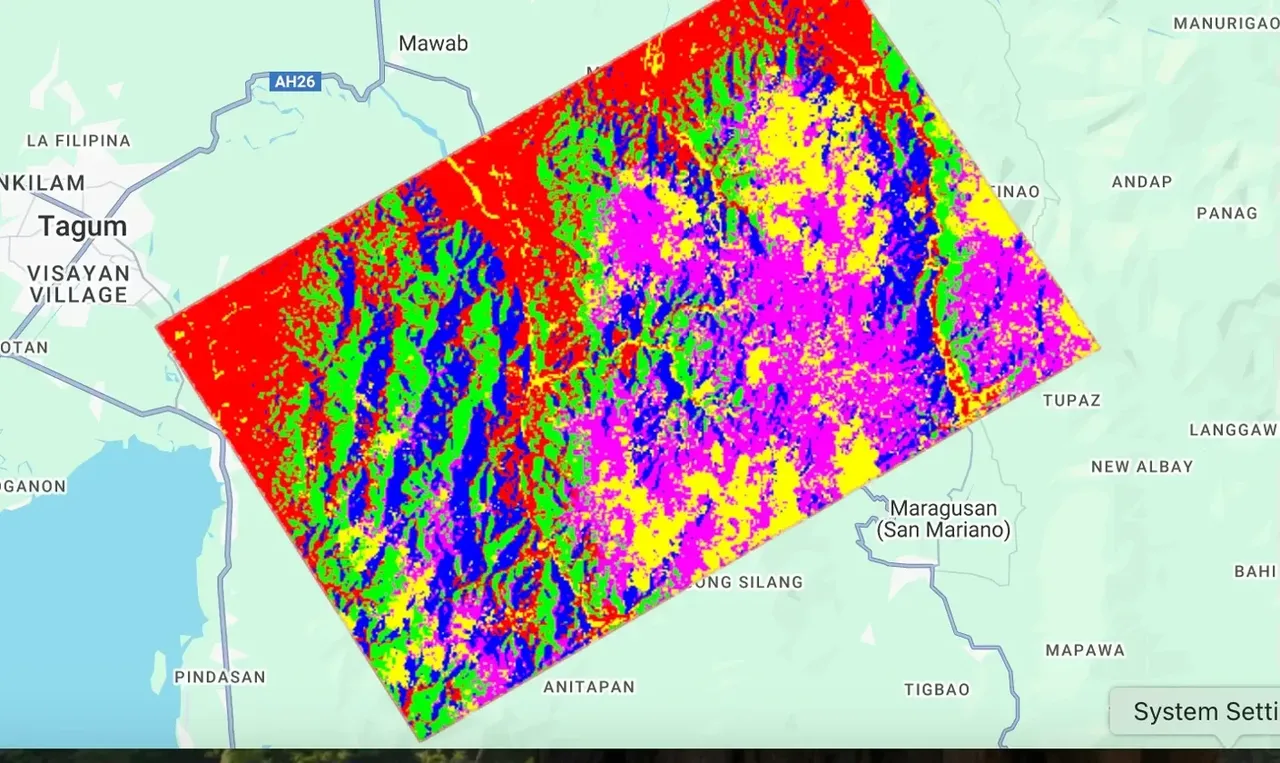
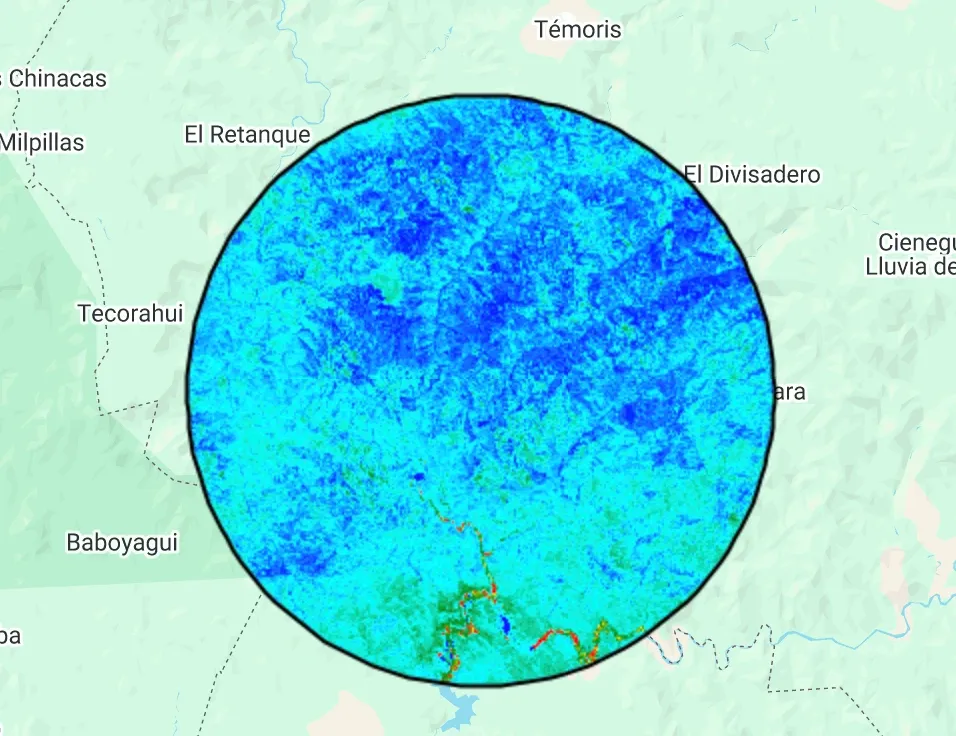
Use Sentinel‑2, Landsat‑8 or ASTER to generate iron‑oxide and hydroxyl indices, then map zones where ferric oxide is anomalously high, where hydroxyl is anomalously high, and where there is a strong gradient between the two.
Alteration zoning interpretation
· Ferric‑rich, hydroxyl‑poor caps can point to gossans, oxidised skarns or iron‑rich shoulders above concealed copper sulfides.
· Hydroxyl‑rich, moderate‑iron zones commonly trace phyllic and argillic haloes that wrap around porphyry centres.
· The transition between these domains, especially along structures or intrusive contacts, is often where economic copper grades are found
Integration with geophysics and geology
Combining alteration maps with aeromagnetics, EM/IP and mapped lineaments dramatically narrows the search space, as demonstrated in Egypt’s Abu Marawat district and several Central Iranian porphyry belts.
Prospect ranking and field follow‑up
Prospective cells where favourable ferric–hydroxyl patterns coincide with intrusions, structures and geophysical anomalies can be ranked and scheduled for targeted mapping, sampling, and ultimately drilling.
This approach has repeatedly demonstrated that satellite‑derived alteration products can identify high‑potential copper zones earlier and at lower cost than relying solely on sparse field campaigns.
Why This Matters for the Copper Supply Gap
Global demand for copper is rising sharply due to electrification and renewable energy infrastructure, yet easy‑to‑find deposits are already largely discovered. Remote sensing offers a way to scan vast, under‑explored terrains for the characteristic alteration “fingerprints” of copper systems before committing scarce budgets to ground deployment.
By explicitly exploiting the inverse relationship between ferric oxide and hydroxyl responses, explorers can move beyond simple “hotspot” maps to true geological vectoring, from regional alteration belts to focused targets to drill collars. In an industry where every meter of drilling counts, seeing copper from space is no longer science fiction; it is becoming standard practice for prioritising the next generation of copper discoveries.